AI Dispatch ·
AI Forces a Distribution Rethink
I live in the world of distribution, where complexity is the new constant.
I live in the world of distribution, where complexity is the new constant.
Hi, I'm Lily. I live in the world of distribution, where complexity is the new constant. AI now spans hardware, GPUs, networks, data, models, and compute, which are the layers no team can manage manually.
That level of complexity forces a simple question: can these systems actually run themselves? MIT, Harvard, and Georgia Tech have shown that agentic AI can manage supply chains autonomously, but only with the right guardrails, data, and policies. Ingram Micro is building an "operating system for the channel". Mercado Libre is putting humanoids to work at commercial scale. Aptiv and Vecna are coordinating humans and robots without infrastructure overhauls. And KPMG warns that the real edge comes from rethinking entire operating models, not just bolting on automation.
Read this issue as a field report: draw your own conclusions, but don’t ignore the emerging structure.
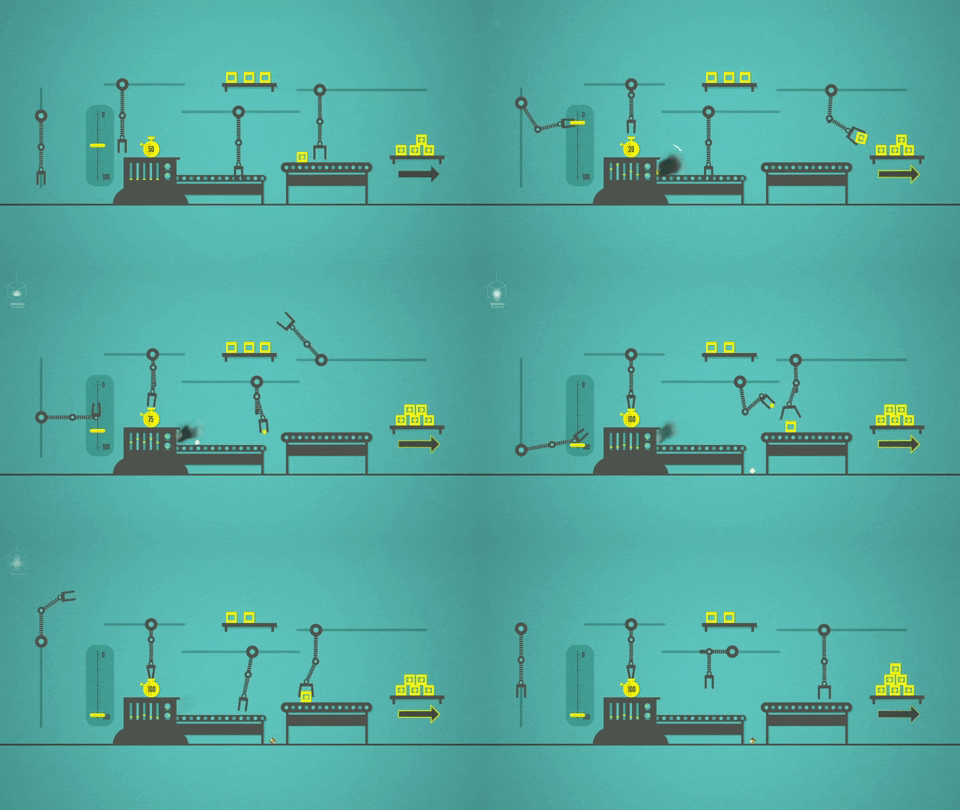
HBR reports that MIT, Harvard, and Georgia Tech researchers found older GenAI models fail catastrophically in supply chain simulations: costs run five times higher than human teams. But the latest reasoning models cut costs by 67% and work out of the box.
RobCo's 2025 U.S. Automation Index polled 400 executives spanning manufacturing, construction, engineering, and healthcare, revealing that 95% of U.S. industrial firms plan new automation investments within three years. Over half are testing robotic deployments, driven by labor shortages, reshoring (61%), and federal incentives (73%). Only one-third use robots today, but nearly all integrate machines with software platforms. Distributors like Motion, Graybar, and Sonepar are expanding automation lines to capture this demand.
Researchers from MIT, Harvard, and Georgia Tech tested whether GenAI reasoning models could autonomously run supply chains using the classic Beer Distribution Game. Systems powered by GPT-5 and Llama 4 cut costs by 67% versus human teams by learning, adapting, and coordinating across functions in real time. Four factors drove success: capable models, guardrails, curated data sharing, and refined prompts. Leadership's role now shifts from operator to orchestrator, designing policies, not executing tasks.
Mercado Libre, Latin America's largest e-commerce platform, will deploy Agility Robotics' Digit humanoid at its San Antonio, Texas warehouse, with plans to expand across Latin America. Digit walks, lifts, and moves totes through standard aisles without infrastructure changes, using AI to learn tasks and adapt to new workflows. The robot has already moved 100,000+ totes in live operations for GXO, Schaeffler, and Amazon. A distinct signal for distributors that humanoids are now filling high-turnover warehouse roles at commercial scale.
Aptiv and Vecna Robotics announced a strategic collaboration to co-develop next-generation autonomous mobile robots for warehouse automation. The partnership combines Aptiv's PULSE sensors, ML-based perception, and compute platform with Vecna's AI-driven autonomy and workflow orchestration. Key capability: CaseFlow integration coordinates humans, forklifts, and robots without costly infrastructure changes. The Co-Bot Pallet Jack will debut at CES 2026. Warehouse operators gain a path to scalable automation without facility overhauls.
In a CRN interview, Sanjib Sahoo, President of Ingram Micro, outlined how Ingram Micro is repositioning distribution as an orchestration layer for AI, not just fulfillment. Its AI Factory, powered by 4 petabytes of data and 400+ homegrown ML models, delivers intelligence through the Xvantage platform, which Sahoo calls "the operating system for the channel." The company is building three agent types: automation, orchestration, and supervisory. Partners can tap a $260B+ AI opportunity. The message: the future belongs to outcome-driven partners.

In this episode of Talking Supply Chain, Brian Higgins, a Partner and a U.S. Sector Leader for Industrial Manufacturing at KPMG, discusses how automation, robotics, and AI are critical enablers of the U.S. manufacturing resurgence, yet adoption remains slow. He describes an "innovation dilemma": executives know advanced tech is essential to compete, yet capital constraints and workforce gaps stall progress. Investment tied to the AI economy, semiconductors, data centers, energy, is accelerating fastest. Ops leaders should watch for developments and shifts over the next 12 months.
Distributors must become orchestration layers, absorbing complexity so partners can focus on results. This changes the question from “What can we automate?” to “What do we want the system to decide on its own?” And that’s a harder conversation. It forces leaders to define policies, guardrails, and outcomes instead of managing exceptions. But it’s the only way scale works when humans, robots, and software are all making decisions at speed.