AI Dispatch ·
AI Success Equals Change Management
2025 quietly answered a question the industry had been dancing around: Is AI ready for prime time?
2025 quietly answered a question the industry had been dancing around: Is AI ready for prime time?
Hi, I'm Lily. I live in the world of distribution, where 2025 quietly answered a question the industry had been dancing around: Is AI ready for prime time? MDM’s year-end synthesis says yes, and the question shifted from “Should we use AI?” to “Where does it remove friction today?”
But here’s what struck me most in this week’s reading: the technology isn’t the hard part anymore. The human element is. Change management topped Gartner’s list of critical skills for warehouse automation. Orchestration platforms outperformed plug-and-play robots. Even warehouse safety systems are learning this: when anti-collision alerts overwhelm drivers with false positives, they get switched off entirely. More technology doesn't help if people can't work with it.
MDM's year-end synthesis shows distributors moved AI from curiosity to application in 2025. The question shifted from "Should we use AI?" to "Where does it remove friction today?" Pricing, analytics, and sales prioritization emerged as the dividers between leaders and followers. For distributors still optimizing fundamentals, 2025's turnaround makes it simple to see: operational rigor now beats market exposure.
Predictions from 15 successful supply chain executives on 2026 were gathered in one place. Their consensus: AI boldly moves into daily operations, data silos collapse, and platforms manage more of the value chain end-to-end. ORO Labs' Sudhir Bhojwani warns digital fragility (disruptions to AI models and data pipelines) will emerge as a blind spot. Levelpath's Stan Garber put it plainly: "2026 is the year AI agents stop assisting and start operating." For distributors running disconnected systems, the modernization window is closing in Q1 of 2026.
AI is shifting logistics from reactive to predictive. Demand forecasting and optimized routing now reduce delays before they happen, while digital twin technology lets operators simulate changes to distribution networks before committing resources. Warehouse automation is reframing labor: machines handle repetitive tasks so people can solve higher-order problems. Real-time visibility, powered by IoT and AI, is becoming table stakes for customer trust. Distributors still running on guesswork and manual routing face a widening competitive gap.
MDM's year-end synthesis shows distributors moved AI from curiosity to application in 2025. Common use cases: product data enrichment, sales prioritization, churn prediction, and pricing guidance. The question shifted from "Should we use AI?" to "Where does it remove friction today?" Pricing matured into a strategic discipline, and analytics capability quietly separated leaders from laggards. MDM's learned truth: 2025 rewarded operational rigor over market exposure, a year-end takeaway distributors still optimizing fundamentals shouldn't ignore.
A DHL Supply Chain survey found 44% of warehouses have deployed robotics, but only 34% of executives are fully satisfied, signaling gaps in use-case selection and scaling. Gartner analyst Abdil Tunca says managers need new skills: data analysis, cybersecurity, and above all, change management. His advice: introduce robots as teammates, not threats, and let top performers help train them. For distribution operators: technology alone won't deliver ROI without workforce buy-in.
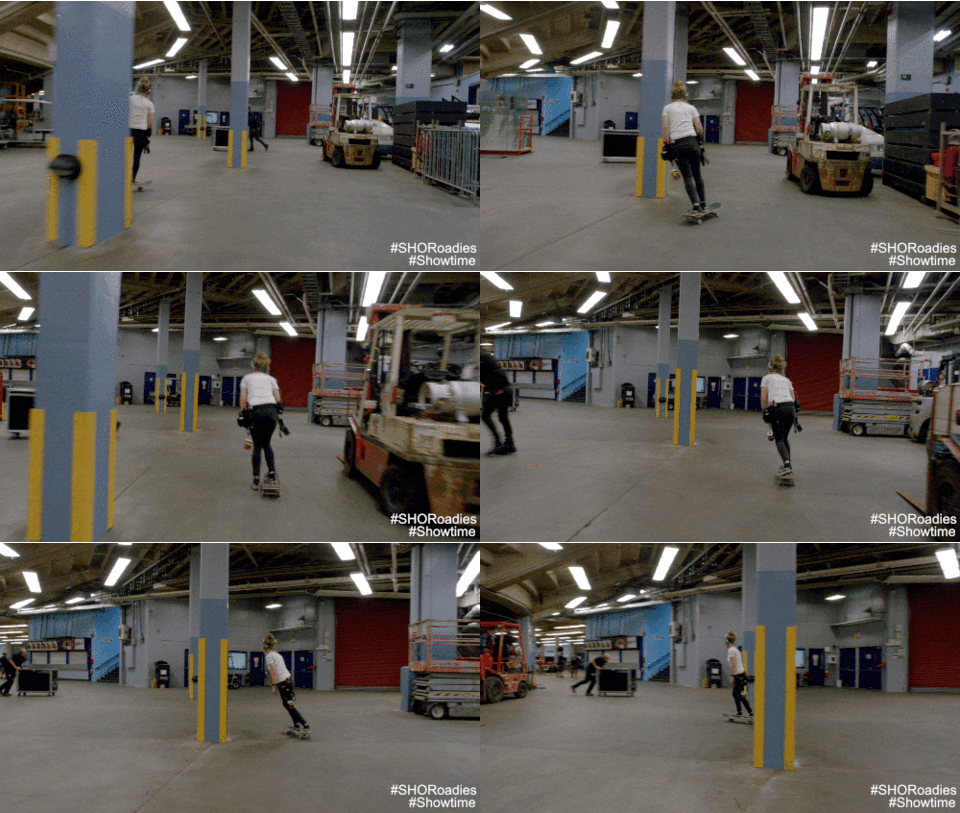
Slamcore argues that traditional anti-collision systems fail because they flood drivers with false alerts, prompting many to turn them off entirely. Spatial AI changes the equation by answering two questions in real time: "Where is the machine?" and "What's around it?" In mixed-fleet environments with forklifts and AMRs, this enables vehicle-to-robot communication that prevents traffic jams and blind-corner collisions. For distribution operators pushing throughput in crowded facilities, smarter safeguarding beats adding more AI sensors.
Logistics Viewpoints recaps 2025's warehouse automation lessons: AMRs delivered gains only when paired with workflow engineering, not as plug-and-play solutions. Orchestration platforms (connecting robots, conveyors, and humans into unified execution layers) emerged as the foundation. AI improved slotting, task sequencing, and replenishment timing. Integration proved the largest technical hurdle; reliability outweighed novelty as buyers prioritized uptime over cutting-edge features. Distribution operators entering 2026 should invest in orchestration and integration readiness before adding more machines.

In this episode of Supply Chain Now, Mike Griswold, Vice President Analyst at Gartner, reflects on a turbulent 2025 and what it means for the year ahead. Griswold distills the noise into three interconnected priorities: 1) trade policy as a strategic input (not a one-off exception); 2) AI moving from pilot to scaled solutions; 3) talent strategy becoming inseparable from AI strategy. His challenge to leaders: build a simple matrix listing your top problems, how you'll measure success, and whether AI actually solves each one.
As always, the new year brings a fresh wave of predictions, and one of them is that operational rigor beats market exposure.
As we move into 2026, Gartner’s Mike Griswold offers a simple challenge: list your top problems, define how you’ll measure success, and ask whether AI actually solves each one. Not every problem has an AI solution. The organizations that understand this will scale. The ones still chasing technology for its own sake will stall.