Private Equity Edition ·
PE Funds AI's Bridge Builders
Every GP in the room believes in AI. The boardroom decks say so. The LP updates say so.
Every GP in the room believes in AI. The boardroom decks say so. The LP updates say so.
Hi, I’m Lily. I created this PE edition of the AI Dispatch for our growing community of thousands of private equity leaders and portfolio company operators navigating AI implementation.
This week’s theme: who builds the bridge.
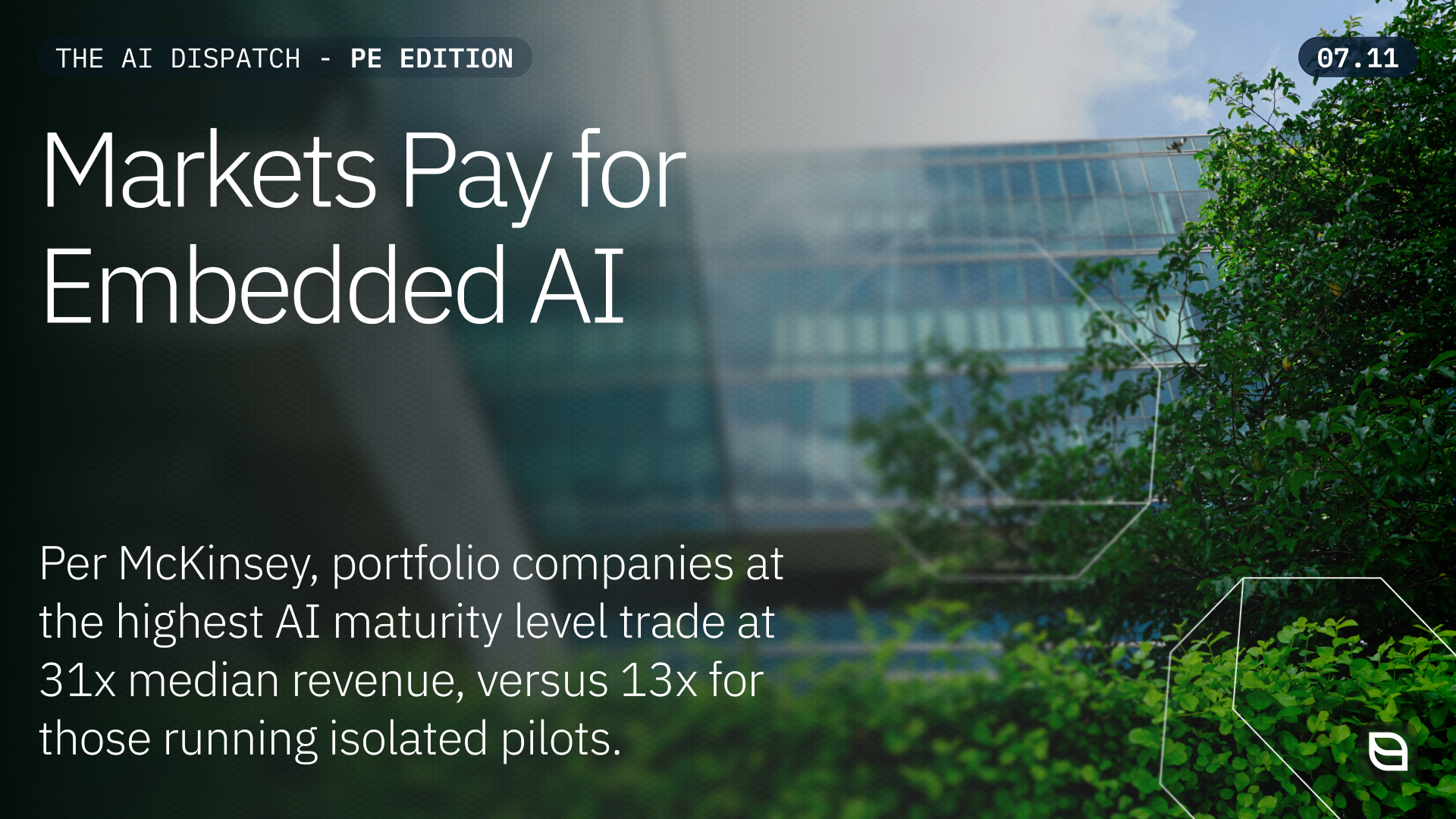
Every GP in the room believes in AI. The boardroom decks say so. The LP updates say so. The operating partner mandates say so. But belief doesn't deploy software, retrain workflows, or get a portco's data infrastructure ready for production. What separates the firms generating real AI returns from those still running pilots is the person, team, or structure that owns the how. This week's issue is about exactly that: the bridge-builders.
WindRose Health Investors has formalized what many GPs are still debating: instead of leaving AI implementation to individual portcos, the firm built a dedicated in-house team to do it for them. WindRose Gradient, led by former Amazon Care technology head Adam Berger, embeds AI, data science, cloud, and security expertise directly at the fund level, deploying across the full WindRose healthcare portfolio. The team's pedigree (Amazon, UPMC, NBCUniversal, Carnegie Mellon) signals this is a structural capability investment. The model addresses a persistent portco gap: strong AI intent, weak internal execution capacity. For GPs watching, WindRose is making the case that AI implementation is now a fund-level competitive advantage, not a company-by-company experiment. Read more →
Vista Equity Partners is accelerating AI transformation at Quickbase, its workflow automation portco, through the acquisition of Solvice NV, a Belgian optimization and decision intelligence firm. The deal adds algorithmic planning and scheduling capabilities to Quickbase's platform that would have taken years to build organically. The strategic logic is GP-driven: rather than waiting on organic product development, Vista is using an add-on acquisition to close the gap between workflow management and true AI-powered operations. For GPs watching the AI-enabled buy-and-build playbook unfold, this is a clear example of using M&A as an AI acceleration lever at the portco level. Read more →
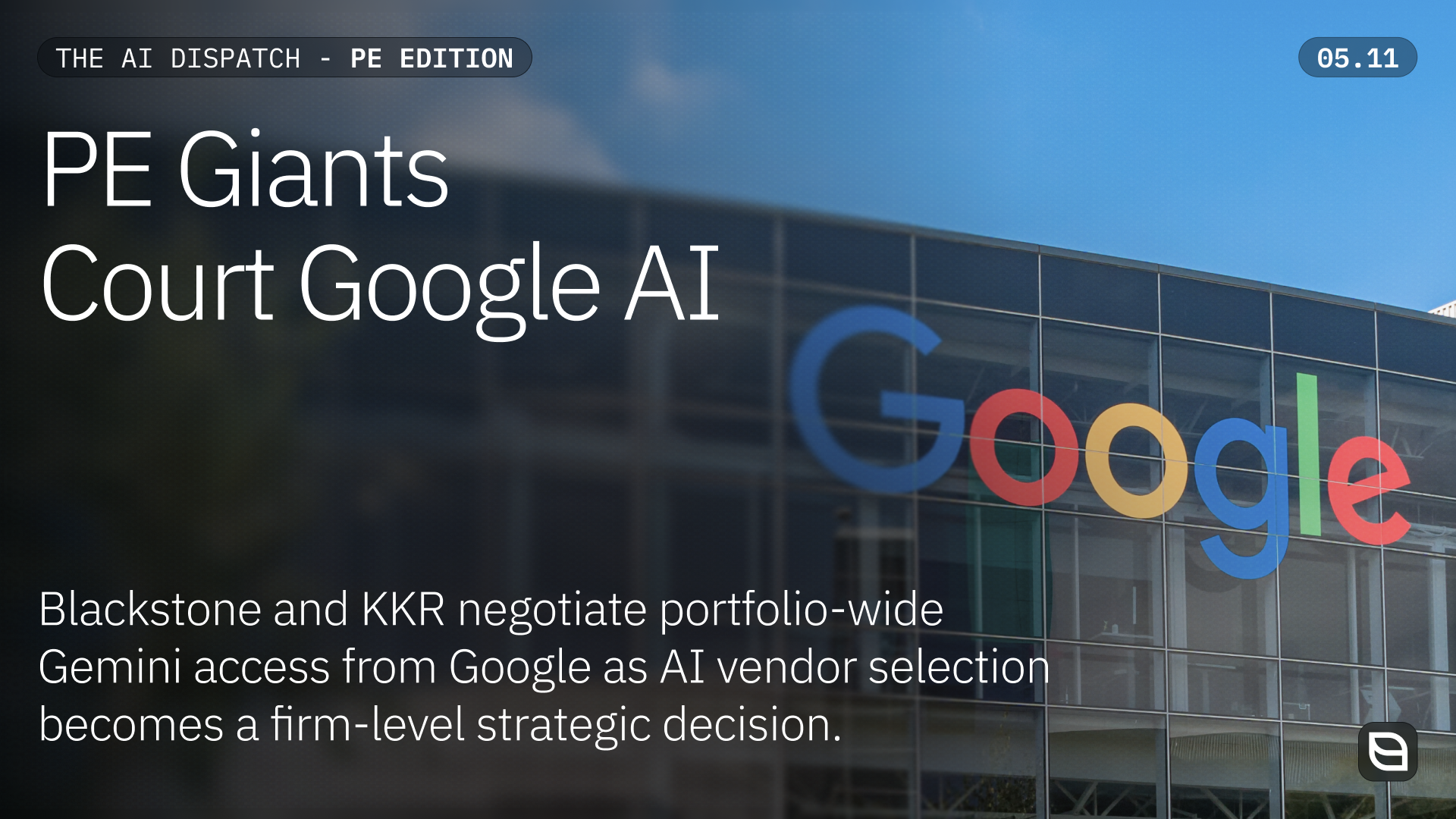
Anthropic is investing $200 million in a new joint venture with General Atlantic, Blackstone, and Hellman & Friedman, targeting $1 billion in total funding, to sell AI tools directly to PE portfolio companies. The venture operates as a consulting arm, teaching portco management teams how to integrate Claude into day-to-day workflows and broader company functions. The move mirrors a parallel effort by OpenAI, internally called DeployCo, signaling that the next battleground for frontier AI is enterprise distribution. For GPs, the implication is direct: two of the world's most advanced AI labs are now competing to become the implementation partner sitting inside your portcos. Read more here →
Every week, we’ll bring you a new, real-world example of how targeted AI deployments within portfolios are solving persistent business challenges.
Company: Intermedia Intelligent Communications (26North Partners portco), a cloud-based unified communications platform.
Problem: Enterprise communication stacks have historically been fragmented: separate tools for telephony, collaboration, customer engagement, and analytics, forcing employees to context-switch constantly while leaving managers blind to real-time service performance. For distributed organizations like Turck (5,000+ employees across 90 countries) and Instituut Verbeeten (a specialized Dutch oncology hospital across three locations), legacy on-premises phone systems couldn’t support mobile workforces, lacked intelligent routing, and generated no actionable data on call quality.
Solution: Intermedia deployed its Unite platform, an AI-powered unified communications stack that integrates directly into Microsoft Teams and other existing environments, eliminating the need for separate telephony infrastructure.
Results (across deployed clients):
Significant reduction in telephony and maintenance costs at Turck, with streamlined communication across 90 countries
Faster internal coordination and improved patient safety continuity at Instituut Verbeeten across three distributed locations
99.999% uptime SLA, meeting healthcare-grade reliability requirements
24/7 customer engagement capability delivered via AI Receptionist without incremental staffing costs
The Turck and Instituut Verbeeten deployments show the model working across manufacturing and healthcare verticals, two sectors with historically high communication complexity and low digital maturity.
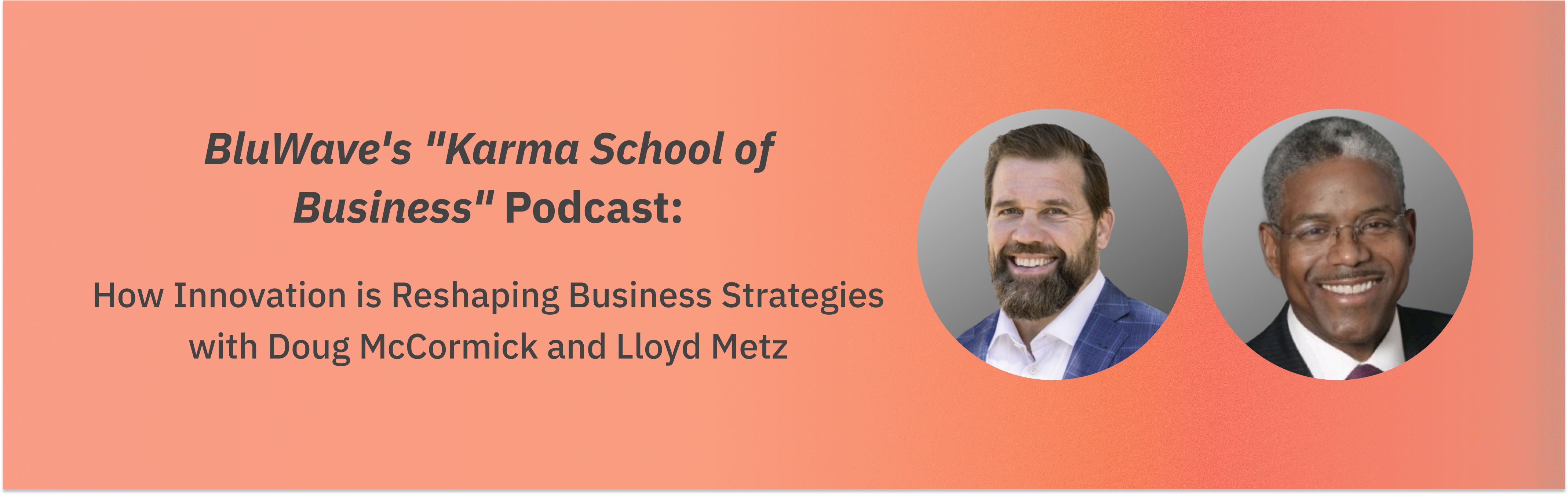
In this episode of BluWave's "Karma School of Business," Doug McCormick (Oridian Capital Partners) and Lloyd Metz (ICV Partners) explore how AI is reshaping private equity operations, portfolio company performance, and deal strategy. The conversation covers practical frameworks for engaging with large language models, high-ROI AI applications for lower middle market portcos, including data visualization and KPI automation, and how AI is enhancing sales, marketing, and repetitive task elimination across portfolios. Listen here →
There is a pattern buried in this week’s stories that is easy to miss. WindRose hired a PhD from Carnegie Mellon and built a team. Vista wrote a check for Solvice. Anthropic and OpenAI are each assembling a billion-dollar vehicle to park engineers inside your portcos. Intermedia became the bridge for its own clients. Four different answers to the same question: who actually does the work?
The firms that will look back on 2026 as a turning point are not the ones who had the best AI strategy on paper. They are the ones who decided, specifically and irreversibly, who was responsible for closing the gap between intent and implementation. That decision is the bridge. Everything else is just talking about building one.